
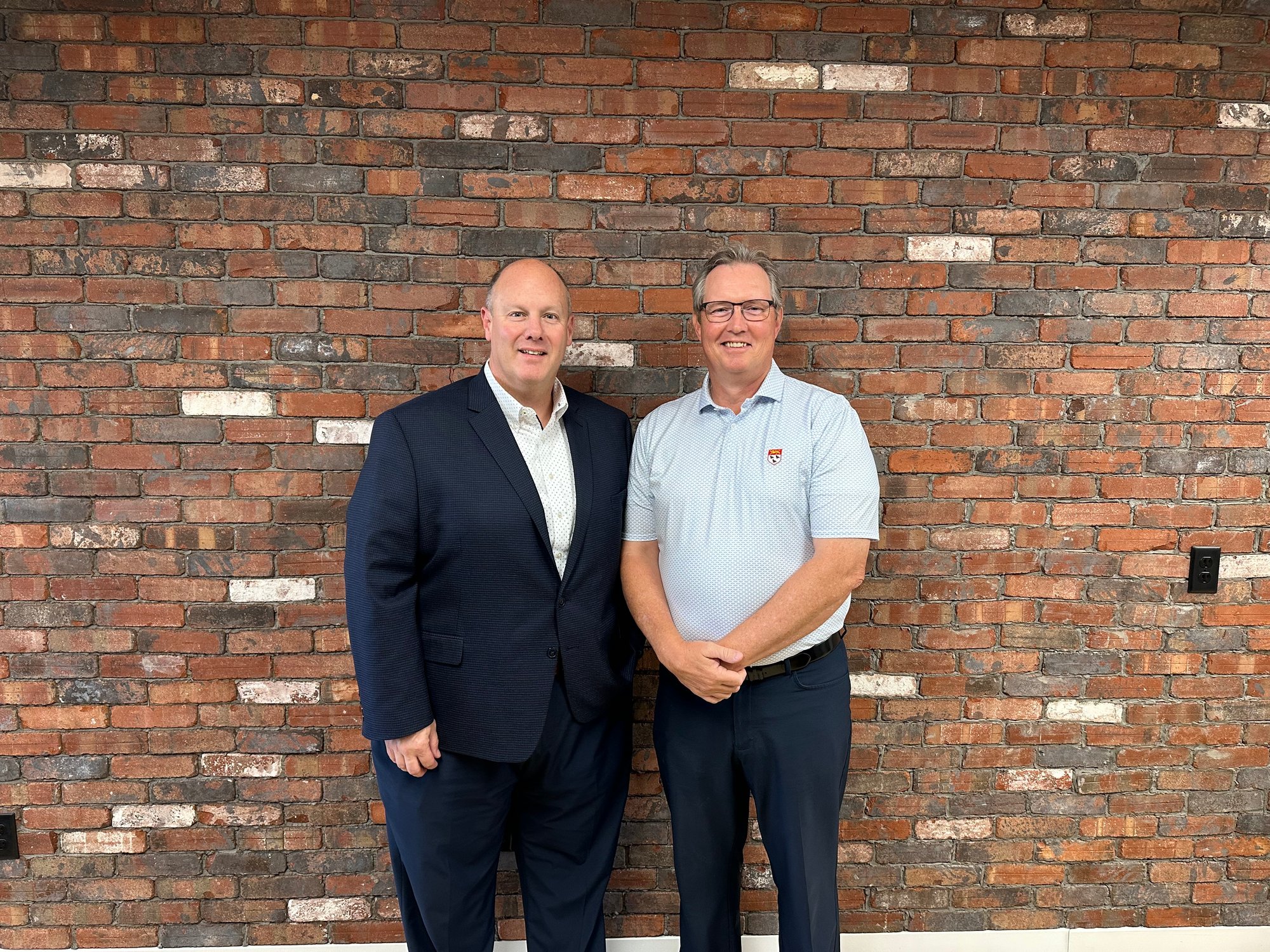
In this episode of Chamber On!, host Matt Appenzeller, President and CEO of the Southern Ohio Chamber Alliance (SOCA), sits down with Chris Kershner, President & CEO of the Dayton Area Chamber of Commerce.
In this conversation, we dig into Dayton’s deep-rooted chamber legacy, what it means to be a true “voice for business,” how the chamber is tackling workforce challenges head-on, and why relationships remain the not-so-secret ingredient behind lasting chamber success.
Tune in now!
Episode Transcript:
Matt Appenzeller
Hello and welcome to the Chamber On podcast. The go-to podcast for small employers and local Chambers of Commerce in Ohio. I'm your host, Matt Appenzeller, President and CEO of the Southern Ohio Chamber Alliance, more commonly known as SOCA. We're an alliance of 130 Chambers of Commerce in Ohio, and today, we are very excited to have the President and CEO of the Dayton Area Chamber of Commerce, Chris Kershner, as our guest. Chris, welcome to the Chamber on Podcast.
Chris Kershner
Hi Matt. Great to be here. Thank you so much for having me. I'm excited to talk to you today.
Matt Appenzeller
Awesome, awesome. So we're both chamber guys. Been there for doing that a long time. So how long have you been, I guess number one in the chamber world, and number two at the Dayton area chamber?
Chris Kershner
Well, number one in business’ hearts for a long time, Matt.
Matt Appenzeller
I know. I know that, and in my heart too, Chris.
Chris Kershner
Thank you, thank you. So yeah, you teed me up for that one. So, I've been at the Dayton Andy Chamber of Commerce for 20 years, this year, 20 years. It's been a great ride. Started off as the Vice President of Government Affairs and Economic Development, worked on advocating and lobbying for the Dayton area business community. Then worked on business recruitment and retention for the region and helping businesses grow. Then became Executive Vice President and did more of the operations, and then transitioned about five and a half years ago into the President and CEO role, when my predecessor and mentor of mine, Phil Parker, retired after 26 years with the Dayton Area Chamber of Commerce.
Matt Appenzeller
So how did you actually get your start there? Like, did you just apply and decide that you wanted to be part of the Chamber of Commerce? Or, like, how did that actually happen?
Chris Kershner
Well, I was in Columbus at the time, Matt, so I am from Kettering. So born and raised in Kettering, Ohio. Local guy, went to Wright State University. I was in Columbus working for at the time Ohio Speaker of the House, Jon Husted, so we were helping John Husted, really with his political journey, helping him officially in the office, but also helping him position for greater things. He's now serving as our US senator in the state of Ohio, and this opportunity opened up. And Jon talked to me about it. He, I remember he called me in his office and sat down and he knew that he knew my wife and I, Lori, were thinking about having a family at that time, and he knew I was from the Dayton area. My parents were in the Dayton area and he had a house in Kettering at the time, and so we knew each other very well. We knew each other's family well, and he knew that family was really important to me, and it was center of my life. And as we were thinking about expanding our family. He knew that we'd like to get back to the Dayton area. At some point, this position was open. Jon did some part time work at the time for the Dayton Area Chamber of Commerce, but prior to that, he was our Vice President of Business and Economic Development, but then was doing part time work when he was serving in the Ohio House. And he said, hey, there's an opportunity to open up in Dayton. He goes, I don't want you to leave, but it's really a great opportunity that will get you closer to home, will get you doing what you love, connected with the business community, and you can still help me with things from that position. And it just seemed like a great opportunity and great marriage. So I wouldn't have done it if I didn't have speaker Husted's blessing at the time, but he gave me that blessing and encouraged me to take the risk, and I'm really glad we did. My wife and I moved down here. We live in Springboro now, and have two girls that are in high school in Springboro. And absolutely love that we made that transition, that move. I couldn't imagine doing anything else but working and supporting Dayton area businesses and locally owned businesses every single day.
Matt Appenzeller
Well, you do a great job, and we're glad to have you. I'm gonna, I'm actually gonna brag on you here for just a little bit, right? So, you had those humble beginnings right over 20 years ago, and now you are part of the US Chamber of Commerce. They have something that's called the committee of 100 and you have been appointed to that committee for a number of years. You know, it's one of the most high profile and respected appointments in the entire Association community. So number one, first, congratulations on that, but, but you know, who do you get to meet while you're in that committee of 100 and what does the committee actually do?
Chris Kershner
Matt, it is, it is a really prestigious appointment. I wish I could claim all the credit for it, but it's really due to the reputation of our organization that has been built up since 1907 when the Dayton Area Chamber of Commerce was originally formed. We were actually one of the founding members of the United States Chamber of Commerce in Washington, DC. And our reputation and always being true to our mission to support businesses over those years has really, what is what positioned me to be appointed to be on that CCC 100 committee so that Committee consists of the top 100 chambers of commerce across the country, puts us at the Dayton Area Chamber of Commerce in the top 1% of chambers, and that's something I'm proud of, but it also is a big responsibility. I don't want to lose that status, because that status helps advance my business community, right? That's what it's about. It's not about me. It's about making sure that Dayton area businesses have the most opportunity to succeed, that Dayton area businesses have the most opportunity to turn a profit, to employ people and support families here in the Dayton region. So it's an important role for us to play but I really feel like the reason we're there is because of the reputation our organization has had over many, many decades, way before me.
Matt Appenzeller
That's right. I'm glad you touched on the start, because I wanted to ask you about, I mean, you have a wonderful origin story at the Dayton Area Chamber. Let's talk about that just a little bit like, who were the key players back then, who helped to start the US Chamber and I don't think people really know that a lot of the roots come from the Dayton area.
Chris Kershner
Well, in 1907 when the Dayton Area Chamber of Commerce was formed, this was a new concept. There was this, this notion of coming together as a business community to advocate for better opportunities to do business. And in 1907 the business leaders of the day, people like Jon H Patterson, who was the CEO of the NCR Corporation, came together with other business leaders in this area, like the president of Reynolds and Reynolds, or James Cox, who started Cox Enterprises now the Dayton Daily News. They came together and formed something that really hadn't been heard of by a lot of people, called a Chamber of Commerce. They established some bylaws that probably got changed a few times as they figured out their way, but they knew they had to have a common voice for business. That's what a Chamber of Commerce does. It is a common voice for business. It is a way to advance the needs of a collective business community, so you can support the greater economic good of a community. So it started like all good things do, it started on the local level, right? It started here in Dayton, Ohio. We started with this Chamber of Commerce concept, and then we realized we need to have somebody at the national level that can we, can, we can feed into the national but we need somebody on the ground in Washington, DC, with relationships with Congress, with with relationships with the White House, with relationships with departments and agencies. So the Dayton Area Chamber of Commerce and a few other chambers across the country came together and said, We're going to help found, to help establish a United States Chamber of Commerce. And now the United States Chamber of Commerce is a force to be reckoned with in Washington, DC, and does a tremendous job at national politics.
Matt Appenzeller
Absolutely, it is. So you just have this wonderful heritage, and I thank you for sharing that first of all. So let's jump into today then, like so that was, you know, over 100 years ago. You know, what are your challenges here in the Dayton area today? And what's the Dayton Area Chamber doing to meet those challenges?
Chris Kershner
My challenges are the challenges of my businesses, right? That's why I run parallel with my business community. So for the Dayton area Chamber of Commerce, we are a 30 person organization. We're located downtown Dayton at the corner of Third and Main Street. We have 2200 businesses that have 200,000 employees that are all members of the Dayton Area Chamber of Commerce. And we represent our business’ needs every single day. Our goal is to walk shoulder to shoulder with our businesses and help them be more successful. Now that means different things for different companies, right? For a small company, providing a health insurance benefit for them might be exactly what they need to be successful. And so what we do, and for those that aren't familiar with the Chamber of Commerce model, we pull our members together. I pull my members together so that I can buy down the rates for essential business services. So, call me the Sam's Club of the chamber world, right? I am group purchasing to get a lower cost, and then it's not a lower cost for me. I guess it is because I, we’re on our own health care plan, but it's more for our businesses so that I can pass along a savings to them that they can't get anywhere else. So I do that for health insurance. I do that for workers compensation premiums. I can do that for office supplies. I'm able to do that for energy. I mean, there's different things we can do that are able to help buy down those rates and save actual hard dollars for our small business community, but they're larger businesses. They don't need that because they have their own influence in group purchasing based on their size. And for them, we're able to provide things like strategic lobbying and advocacy, relationships with local, state and federal government officials, workforce development to support, to help them identify new groups of workers that can help support their growing workforce needs. Sometimes it's as easy as there's a pothole in front of my business, and every time a car pulls in, they pop a tire.
Matt Appenzeller
Isn't that weird that it actually comes down to something as simple as that sometimes, but yeah, no, go ahead, I’m sorry.
Chris Kershner
And so we're able to help get that pothole filled, right? The way we're able to help do it as an organization is relationships. What I can't emphasize enough is I am in a relationship game. That's what I play, right? It is having relationships, maintaining relationships, earning relationships, and continuing those relationships. That's what we're doing. And those relationships come in many, many different forms. But the Dayton region values relationships more than any other community I've ever been in in my entire life. It is all about relationships. People like to do what we're doing today, one on one, sitting down across the table from one another, having a conversation, getting to know you as a person. If you do that in the Dayton business community, you will have success.
Matt Appenzeller
That's right. That's why you uncover opportunities. You uncover ways to collaborate with one another, all of that. So Chris, let's talk a little bit about the workforce challenges that you have. I know that different industries may have different challenges. Can you go into some of the things that you're working on, or maybe some of the challenges that your members currently have?
Chris Kershner
You're absolutely right. Different industries, different job types, have different workforce challenges. The one that's consistent, though, is attracting and retaining workers, right? Every company needs that now. Companies do that in different ways, and companies are looking for different types of workers, right? A manufacturer may be looking for folks to work in their manufacturing shop, while a large corporate member might be looking for a CFO. Those are different people. Doesn't mean, both jobs are vitally important. Both jobs are critical for our region, but we're going to look at a different pool, or a different way to attract individuals to that, to each one of those types of positions. We work, we like to work with what I call non traditional groups of employees, right? Everybody today, everybody who's looking for an opportunity in a certain field, should have the resources to be able to find that opportunity, but for certain what I call non-traditional groups, they need help finding those resources, and they can be a great workforce solution for a lot of companies. I'm talking about things like legal immigrants, right? Legal immigrants that are looking for the right opportunity, but might have a language barrier. How can we help solve that language barrier so they could be a good employee for one of our companies? For certain companies, ex offenders, folks that had been incarcerated for non violent crimes and are looking to reestablish themselves in a community and want to work and earn a paycheck, could be a great workforce solution. So trying to help them overcome some of their barriers. We also focus in on individual demographics of workers. For example, we have coming out of University of Dayton, we have about 51% of their law school grads are female. Coming out of our local universities, about 46% of graduate degrees are female. If you look at our middle management in the Dayton region, about 47% is female. But when you get to executive level leadership, that drops to 23%. So there's a big disparity, right? So our challenge as a chamber of commerce say, how can we help more female leaders navigate that journey to C suite to executive leadership? So we've established specific programs to help female leaders advance and overcome those challenges that are barriers for them, that are standing in the way for them, getting that CFO role at a company. So, we're working with targeted groups like that to help them overcome their barriers so that they can be a great applicant for a position with a Dayton area company.
Matt Appenzeller
So your website is DaytonChamber.org. Could I find out more information on that particular program?
Chris Kershner
You sure can. So DaytonChamber.org, that program is called Empower. It's a specific 10 month cohort, specific program targeted at women leaders. All are welcome to apply, but it is a great program to help women leaders. We also have a program there targeted to early career professionals, so folks that are maybe at the, I won't want to say the beginning of their career, but at the earlier stages of their career. We don't card anybody, but I would say it's generally 28 to 40 years old, that age range right? And we take them through a workforce development cohort program where we help them learn things like, how do you serve on a non profit board in the community? Why it's important to serve on a nonprofit board. How you can give back. How do you move from a peer to a supervisor in an organization? How do you manage people with diverse backgrounds and with cultural sensitivity? Training I wish I had when I was 30 years old, right?
Matt Appenzeller
Yeah, we didn't talk about that stuff when we were that age.
Chris Kershner
And we made mistakes and learn by making mistakes. And so if I can help younger employees not make those mistakes and become a more valuable leader for Dayton businesses, then the Dayton Area Chamber of Commerce is doing its job.
Matt Appenzeller
Yeah, very cool. So, you also, previously in the conversation here, you talked about advocacy representation. I know that the Dayton Chamber kind of leads a regional effort with other chambers of commerce, right? I'm gonna ask you two questions. One, can you describe that particular program? And then, you know, what are the top maybe two or three things that you're working on legislatively?
Chris Kershner
Let's all start with really why we do advocacy, right? I mean, we do advocacy because government decisions impact business opportunities. And our businesses are busy running their companies every single day. They don't have time to monitor legislation or monitor ballot issues to see how it's going to impact their company. But it 100% does impact their company. Sometimes it's through a financial means. If there's a new tax that is being considered, it could be through a regulatory means, if there's a new regulatory burden that's coming down.
Matt Appenzeller
So it could be closing down a road to fix a pothole.
Chris Kershner
That's exactly right, that's right. So if you close down a road to your business and nobody can get there anymore somebody has to advocate to that local government to keep that road open and why it's important and help them find an alternative solution. So that's our job. We have three registered lobbyists at the Dayton Area Chamber of Commerce that every single day are monitoring legislation, monitoring those road closures that you talked about, monitoring ballot issues. We are working on advancing legislation that helps the business community succeed, and we're working on killing bad legislation that is harmful to Dayton area businesses. That's what we do. But we have to be that voice for business at the State House in Columbus or in the Capitol in Washington, DC, or at city hall here in the Dayton region. If we're not that voice for business, nobody else is. So we take a lot of pride in that and work hard on it every single day. Now to be an even stronger voice, we like to work with all the local Chambers of Commerce. So we have a group called the Regional Chamber collaborative. This is a group of 28 of the local Chambers of Commerce where we work together on collective government affairs issues. It helps strengthen our voice. So selfishly, I have a stronger voice now because I have 28 local Chambers from communities all around the Dayton region, helping to advocate for legislation we're working on that impacts their business members as much as it impacts my business members. For those local chambers of commerce, we are now a resource for them. We're helping give them information about legislation they may not have been aware of, so that they can be an even stronger Chamber of Commerce in their own community. So it's a great two way street. Anytime we can broaden our reach, broaden our impact, we want to do that.
Matt Appenzeller
Well, it's a great way for you to collaborate with these, with the local chambers, and build relationships.
Chris Kershner
That's exactly right. Now what we don't do, Matt, is important to know, is, we don't work, we don't do candidates. So you'll never see us supporting or opposing a political candidate for office. Issues only, ballot issues, legislation, regulatory issues, administrative issues, issues only, no people. So we don't have a PAC, which is a political action committee. We're not giving campaign donations. We're not endorsing one candidate over another candidate. It doesn't matter to us If you're a Republican or you're a Democrat, I don't care. It's not about R or D, it's about B. If you're supporting business, then I want to work with you. I want to work with you.
Matt Appenzeller
Can I steal that?
Chris Kershner
Yeah, steal away. I call it chamber R and D, rip off and duplicate. So it's so we're not doing people now. We engage with candidates. We engage with elected officials, because it's about relationships, like I talked about earlier. We have to have a relationship with the folks in the Ohio General Assembly in Columbus, with the governor's office, with our congressional delegation, with our senators, because if I don't have a relationship, then we're not able to exercise the voice of the Dayton business community.
Matt Appenzeller
That's right. That's right. Very cool. Well, Chris, what are the future goals, or like, what are some of the things that the Dayton chamber has set out to do over the next 2, 3, 4, years?
Chris Kershner
It's being a part of the Dayton air chamber of commerce right now is exciting. Our economy is on one of the best economic trajectories I've ever seen in my lifetime. Regionally, regionally, yeah, and I would say as a state too, as a state and we're we the Dayton region reflects the economic growth of the State of Ohio. Just recently, Westrafo out in Trotwood did a ribbon cutting on a new $50 million facility that's going to employ 250 people for advanced manufacturing in Trotwood, we just did a ribbon cutting for the On Main development that's going to create a state of Ohio innovation hub that brings defense sector together with commercial partners for innovative opportunities at the old fairgrounds in Montgomery County. The old fairgrounds where the fairgrounds used to be in Montgomery County. Those are big, big projects. Honda out in Fayette County. 2200 jobs, four and a half billion dollars, billion with a B investment. So there's a lot of really good things happening right now. So that economic trajectory gives us momentum as a community. It gives us really, really strong momentum. So when I look forward to the future, I'm going where my businesses are going. If I'm doing my job, I'm a step ahead of them, right? I should be a step ahead of them, helping guide them and solving their problems before they know that they're problems.
Matt Appenzeller
So you're trying to see around corners then?
Chris Kershner
That's what we do. If I can eliminate issues before they become an issue, I'm doing my job as a chamber of commerce, right? I mean, my mission, pure and simple, is business. It is local business. It is helping those businesses be successful, and doing every single thing I can to eliminate barriers to their growth, eliminating barriers to profitability. Companies should make a lot of money. They should employ a lot of people. They should support their community. They should sponsor the Little League teams, but they can only do that if they're being successful. And my goal is to make the Dayton region the most successful place for a business to operate in the entire world, and we're going to keep working towards that.
Matt Appenzeller
Very cool. So if there's a small business owner who's listening to us out there in this conversation, what are the top couple of reasons why they should either join their local chamber or join the Dayton chamber?
Chris Kershner
Being engaged with your chamber gets you a seat at the table. If you have a seat at the table, your position, your input is validated, and you have access to make sure that that organization is supporting your business. So being a part of that local Chamber of Commerce, extremely important. They are going to help with the local vibrancy of that community, right? They are going to help put on the tabletop display in that community or that business after hours in that community, that helps local businesses in a small community connect. I'm not going to do that. I'm not working on festivals or events like that at a like a local chamber would, that's very important. It's just not my role. My role is going to be broader. My role is going to be workforce development, public policy and advocacy, economic development and big picture business services. So that's, that's what I'm doing. So if somebody's doing business in the Dayton region, and I should say the Dayton region as we define it as a 14 county region, right? Our Dayton region goes all the way west to the Indiana border, all the way north to Auglaize County, all the way east over into Fayette County and south into Warren and Butler counties. So if you're doing business within that 14 county footprint, you should be a part of the Dayton Area Chamber of Commerce, because we're going to help you connect you with local suppliers, local workforce, and provide that local advocacy that you need for your business to continue to grow.
Matt Appenzeller
Well, that's awesome. Well, Chris, thanks for being on the Chamber On podcast today. You can find out more about the Dayton Area Chamber at Dayton Chamber.org.
Chris Kershner
DaytonChamber.org, we're all, I'm on there. You can look up my name and cell phone number and give me a call anytime, or look for our or look at our events calendar and see what we have coming up. We have 152 different events a year. A ton of ways for businesses to connect one on one with each other, because it's about relationships. That’s the third time I've said it right, it's about relationships. So when we have a breakfast with 180 different business executives at it it's a great place for you to connect with other business leaders, to connect with your peers, because sometimes it's not about the Dayton area Chamber of Commerce solving your issue, it's about us facilitating the connection so that one of your peers can help you solve your issue.
Matt Appenzeller
That's right. That's right. Well, thanks for being here. I do have one final question that every guest on the podcast has to answer, right? So Chris, who is the greatest rock and roll band of all time, is it the Beatles, The Rolling Stones, or Led Zeppelin?
Chris Kershner
Are those my only three choices?
Matt Appenzeller
You know, you're the CEO of the Dayton Area Chamber you can answer it any way you want.
Chris Kershner
Well, as the CEO of the Dayton Area Chamber of Commerce, I feel like I should say something like the Breeders, because they were a Dayton based,
Matt Appenzeller
McGuffey Lane.
Chris Kershner
Yeah, Mcguffy Lane, or Lakeside, or Guided by Voices, or one of those Dayton area bands, but I wouldn't be being honest with you if I said that. I like those bands. They're just not my absolute favorite bands. My favorite band was Tom Petty. So I was a guy of the 80s and 90s, and I was a big Tom Petty guy. Saw him back then when he was on tour, and then actually saw him on tour two months before he passed away. And so I love Tom Petty. Great, great artist. He has that kind of rock, but hippie vibe to him. And I don't know, I've always really enjoyed his music, but if I didn't say him then I'd say a Dayton band like the Breeders, or somebody like
that.
Matt Appenzeller
Well you're not going to go wrong saying Tom Petty. I happen to happen to agree with you. So to our listeners, thanks for tuning in. Again, if you want to learn more about the Dayton Area Chamber of Commerce, please visit their website at DaytonChamber.org. Until then, Chamber On everyone.
Chris Kershner
Thanks, Matt.